A story developed for Ian and DTRT Lab
A note on the setting
This work is fiction, set in Puerto Rico in 2032. Its characters, companies, armed operations, record systems, and criminal events are invented. The real places and historical events are not evidence for its fictional conspiracy. Interior locations and minor streets are fictionalized; the journey retains the island’s regional geography. English narration renders conversations that often occur in Spanish. Historical and adaptation notes are supplied separately.
1 — The completed journey
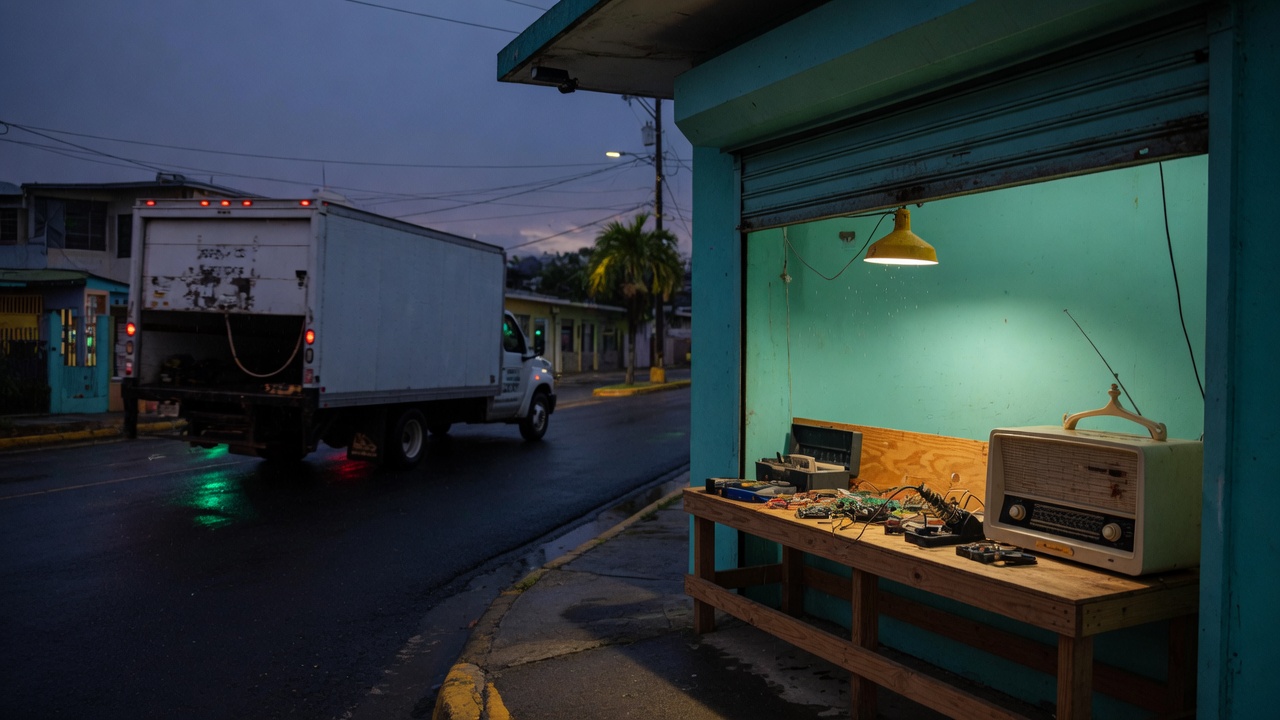
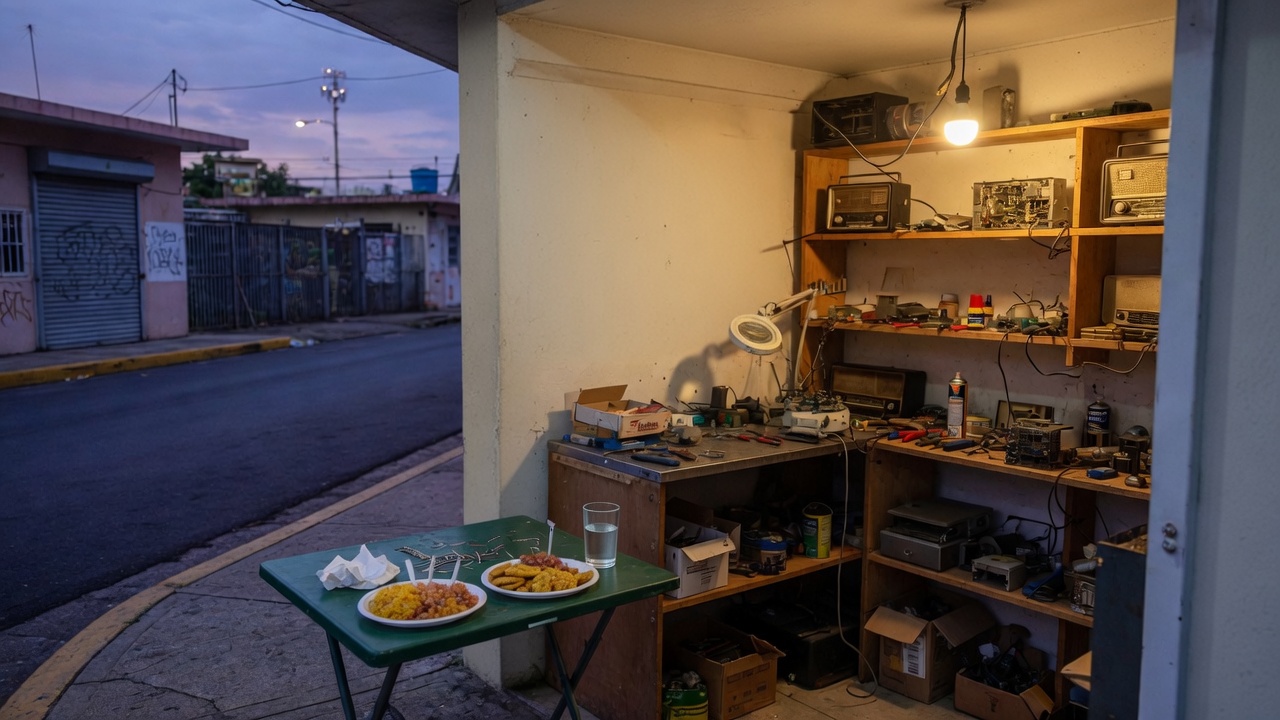
The radio on Gabriel Vélez’s workbench could receive everything except the station its owner wanted.
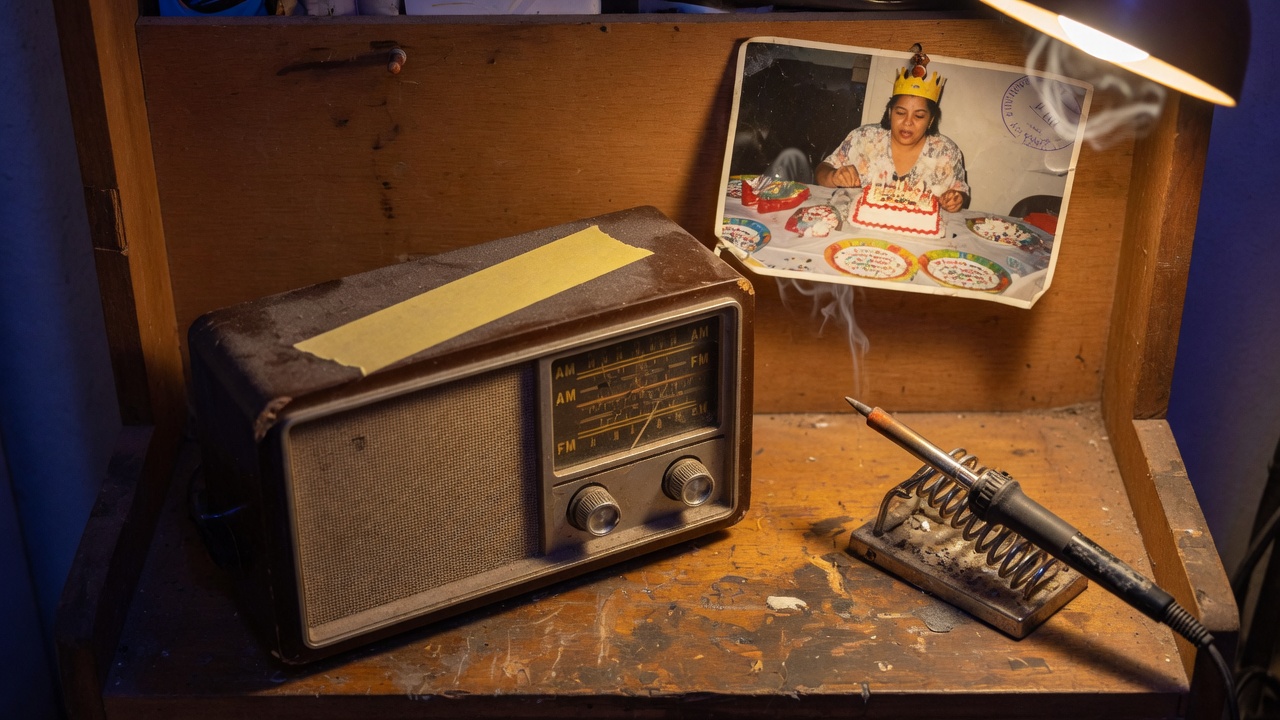
He turned the tuning knob through two sermons, an argument about baseball, and a song his mother used to sing incorrectly. The old woman who owned the set had put a piece of masking tape beside the frequency she preferred. Gabriel had replaced a capacitor and cleaned the contacts. He could restore the machine, but not the transmitter that had stopped broadcasting three months earlier.
He was considering how to explain this when his sister called.
“What did I break?” Inés asked.
The shop’s rolling door was halfway down. Beyond it, Añasco was still mostly dark. A delivery truck passed with a loose metal panel knocking against its bed.
“This week?”
“When we were little.”
Gabriel set down his soldering iron.
He could hear ventilation on her end, a low vibration with something rattling inside it. She was at a work site. She had told him she was taking three days off.
“The blue pitcher,” he said.
“That’s what we told Mami.”
The line made a dry clicking sound. Inés inhaled sharply.
“If somebody tells you I need rescuing, ask them that. And don’t use—”
Her voice stopped. The ventilation stopped with it.
Another voice said his name.
“Gabriel. Stop looking for your sister. Come get me.”
He brought the phone close enough for the glass to touch his cheek.
His mother had been dead for fifteen years.
“Mami?”
The message repeated. The same breath, the same faint scrape before his name. He listened three times before he remembered how to end a call.
He called Inés back. No answer. He called the night number for the relay station where she had recently worked. A recorded menu asked whether he was reporting an interruption or requesting a relocation.
Gabriel selected interruption.
“Your continuity event has been completed,” the voice said.
He checked the number. It was right.
Above the workbench was the last photograph they had printed of their mother: Marisol in a plastic chair, leaning away from a birthday candle as if it were an animal that might bite. Inés had been trying to make her laugh. Gabriel was outside the frame, holding the cake. For years he had wished there were a picture with all three of them in it. This morning he resented that desire, as if it had left a door unlocked.
He sent the call recording to himself, then called emergency services. He gave the address, explained the interruption, and stopped before describing the second voice. The operator asked whether he had seen anyone threatened. He had not. She took the information and told him not to enter the property.
He retrieved the locked case he used for licensed security work. It had not left its shelf in seven months.
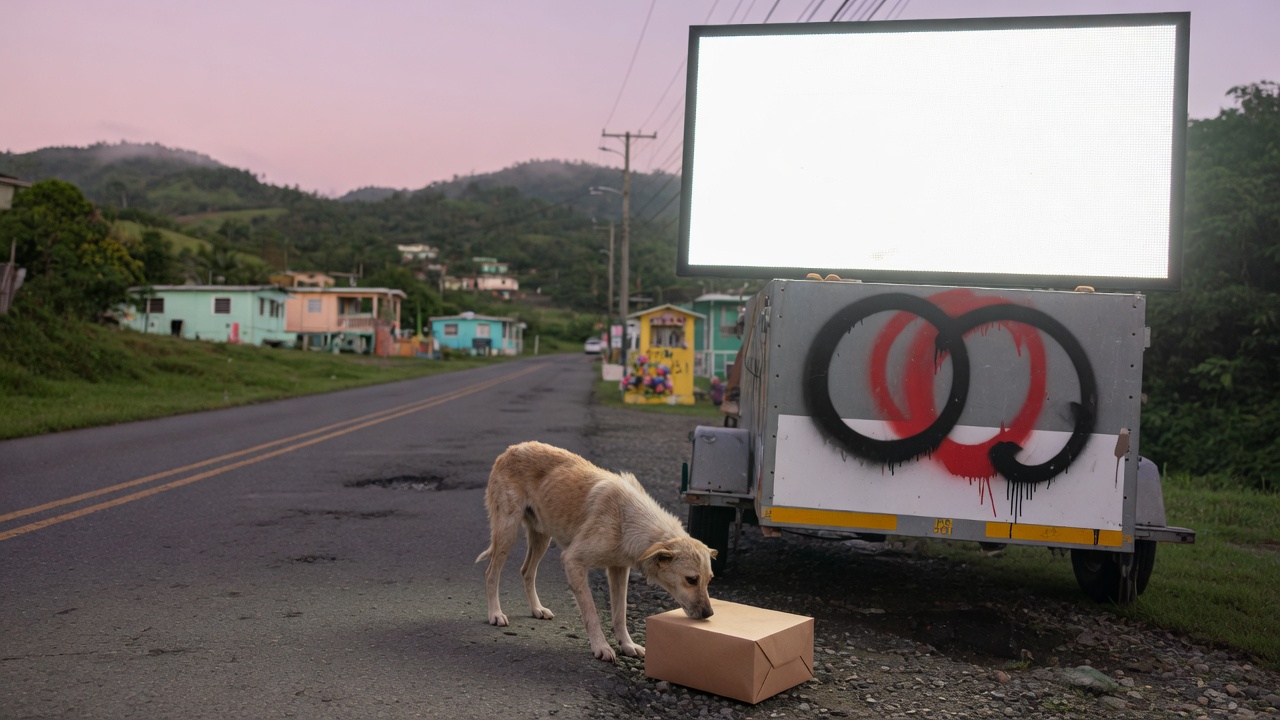
On the road toward the relay compound outside town, he passed a portable electronic sign belonging to Meridian Continuity. He knew its logo: two overlapping circles, one slightly incomplete. The company serviced communications equipment for several of his customers.
The sign was meant to direct vehicles during a scheduled transfer exercise. Instead, it was cycling through what looked like an internal manifest. Names. Addresses. Status codes.
His name appeared halfway down a page.
VÉLEZ, GABRIEL M.
TRANSFER WINDOW: 08 NOV 2032.
COMPLETED.
It was November 7.
He stopped and photographed the display. The next page replaced him with a man named Luis Mercado, whose destination was a place Gabriel had never heard of.
Behind the sign, dawn was beginning to reveal the shape of the hills. A dog inspected a discarded food container. Somewhere, someone had started making coffee.
Gabriel’s phone vibrated. A message from an unknown number contained a location pin for the relay station and four words.
SHE IS STILL INSIDE.
He drove the rest of the way with the radio off.
2 — Dead air
The first thing wrong with the station was the quiet.
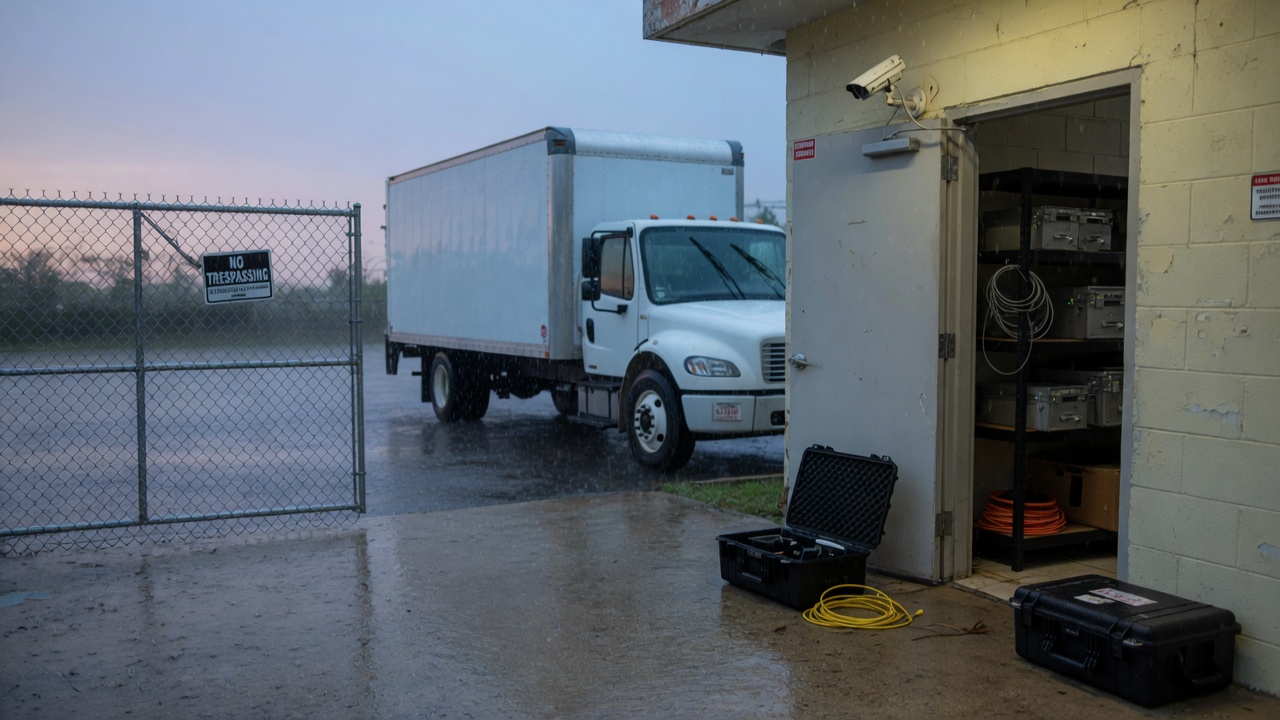
Inés complained about that building constantly: the vibrating cabinet, the office fan, the delivery driver who leaned on his horn instead of walking to the gate. Now the gate stood open and a white truck idled beneath an unlit security camera.
Two men were carrying equipment cases out of the service building. Their uniforms belonged to a subcontractor, not the police. Gabriel recognized the clipped way one of them checked the gate, the truck, the roof, and then the gate again. He had worked beside men trained to look at a place that way.
He parked short of the entrance and called out that he was looking for his sister.
The taller guard approached with one hand against his radio.
“Your sister left.”
“When?”
“Last night.”
“She called me twenty minutes ago.”
“Then ask her where she is.”
From the open door of the service building came three hard blows against metal.
The guard heard them too. Gabriel saw the decision reach his face. He backed toward the truck before the man’s hand left the radio.
The first shot broke the passenger window.
Gabriel dropped behind the engine block. Glass ticked against the pavement. Years of training arrived without the clean certainty he remembered: a trembling left hand, the absurd awareness that he had left the shop light on, the need to see before moving.
He shouted that he did not want to shoot. The answer struck the hood.
He returned fire only when the guard stepped out beside the gate. The man fell behind a concrete planter. Gabriel could not tell how badly he was hurt. The second guard dragged him toward the loading area, firing badly over his shoulder. The truck pulled away without its last cases.
Gabriel stayed down until its sound had receded. He called emergency services again, gave his location, said shots had been fired, and put the phone on speaker beside him. The dispatcher told him to remain in cover. Then the blows inside the building resumed.
“Someone’s locked in,” he said.
He crossed the yard low and fast, furious with himself for every open step.
Luis Mercado was in a maintenance cage with a cable reel braced against the door. He had a bleeding cut above one eyebrow and an expression of immense irritation.
“They put that there,” Luis said, pointing at the reel. “They could have just taken my keys.”
Gabriel moved it. Luis came out carrying a lunch cooler.
“You went back for that?”
“I was already in there.”
The ordinary answer steadied him more than gratitude would have.
Luis knew Inés. She had been working on a separate terminal after the rest of the office closed. At some point she had argued with a man who arrived in a car without company markings. Then she had walked out with him.
“Walked?”
“I know what walking looks like.”
“Was she being threatened?”
Luis touched the cut. “They were polite until I asked that.”
In the office, Gabriel found his sister’s mug, half a packet of crackers, and a paper strip from a label printer. Beneath her handwriting—DO NOT MERGE—was a long case number.
The screen beside it was blank. Luis restored power to one cabinet while Gabriel watched the entrance. A cooling fan spun up. The terminal resumed the export it had been running before the circuit was cut.
The export was not a list of dead people. It was a queue of service cases: open, suspended, transferred. Each entry included a person’s name, an address, a receiving contractor, and a sign-off.
Gabriel found himself. A planned relocation exercise had been marked complete before its scheduled date. The same batch included Luis.
“Look,” Luis said.
The signature beside his name resembled his signature without any of its hesitation. He signed slowly because two fingers on his writing hand had never healed correctly.
“That’s not mine.”
Near the bottom was Marisol Vélez’s name. Her case had no destination. Only a notation: LEGACY IDENTITY—RESOLVED BY TRANSFER.
Gabriel did not understand it. He copied the export without changing it, photographed the screen, and wrote down the cabinet number because Luis insisted. Luis had spent thirty years watching people blame whichever technician touched a broken machine last.
The arrival of the first patrol car ended the search.
Gabriel put his weapon down and raised his hands. He gave a statement sitting on the curb. Luis gave a separate one. The officer separated their accounts carefully, which Gabriel would later be grateful for, although at the time it felt like disbelief.
By late morning, the station was secured. Gabriel’s weapon and the available recordings had been taken into evidence. His sister was listed as missing; the guards and truck were being sought. Nothing had been dismissed. Nothing was moving at the speed of his fear.
Before leaving, Luis handed him the lunch cooler.
Inside, wrapped in a towel, was a small digital recorder.
“Your sister asked me to keep it somewhere nobody important would look.”
The top file was named MARISOL_ORIGINAL.
It would not open.
3 — The blue door
Lucía Ferrer met him in Mayagüez at a café where the owner knew exactly how long a person could occupy a table without buying another coffee.
Gabriel had not seen her alone in nearly a year. Their last conversation had concerned an apartment they had almost rented together and the difference between coming home and merely returning to an address.
She was a reporter. That was why he called her, he told himself.
She put a notebook on the table.
“Start with what you saw. After that, tell me what you think.”
He disliked the distinction. She waited until he began using it.
Lucía knew Meridian. She had spent six months following complaints from households whose service records had been moved into temporary accommodation programs they had never accepted. A contractor’s database was not the property registry, she explained. It could not legally erase a deed. But it could influence inspections, reimbursement decisions, deliveries, and what a subcontractor claimed to have completed.
“Enough systems repeat a wrong address,” she said, “and eventually a person with authority sees ten confirmations instead of one error.”
The problem was proving deliberate repetition rather than incompetence.
Gabriel showed her the future-dated completion. She stopped stirring her coffee.
She called a lawyer she trusted, Adriana Soto. Adriana arranged for copies to be preserved and told Gabriel not to distribute the full export. It contained medical referrals and addresses unrelated to his sister.
“Who can I give it to?”
“We’ll make that decision entry by entry.”
“There are hundreds.”
“Yes.”
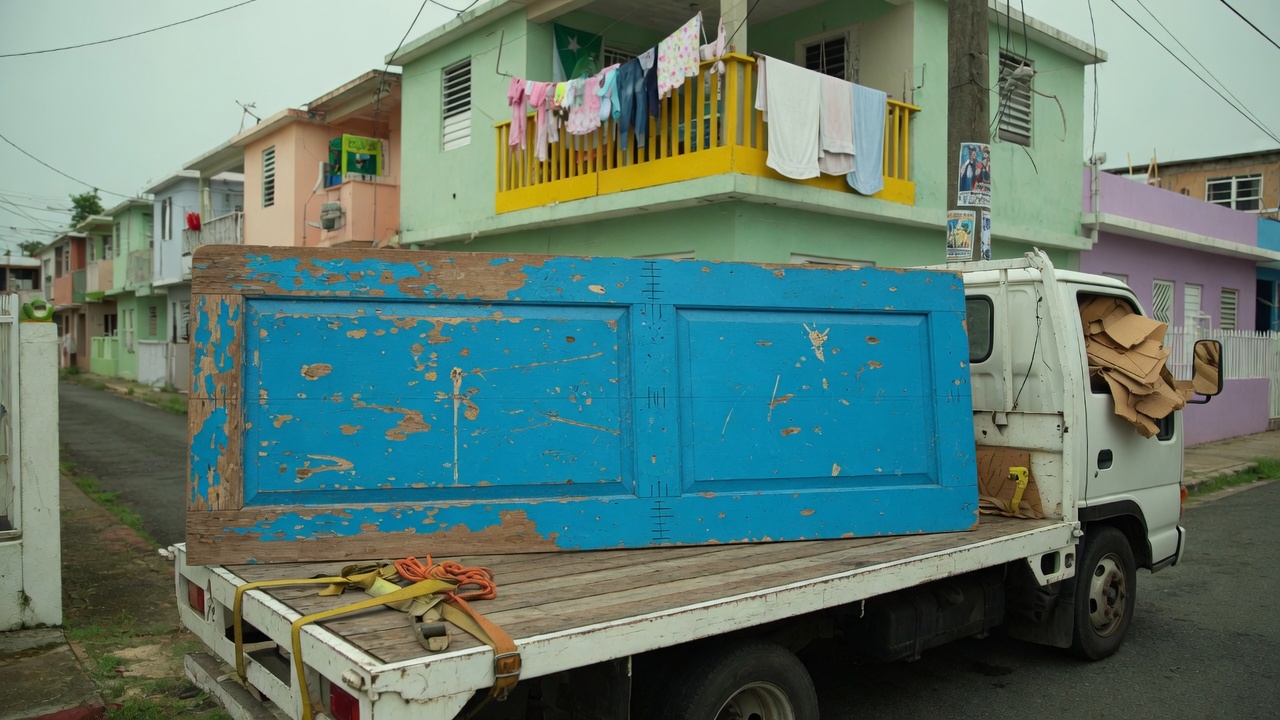
Outside, a woman named Doña Celia was arguing with a driver over a blue wooden door strapped to his flatbed. Lucía recognized her. The door came from a house in a clearance project on the edge of the city, one of the cases she had been documenting.
Celia had papers. The driver had papers. The papers disagreed about where her possessions were going.
Gabriel offered to buy a replacement door.
Celia stared at him as if he had offered to replace a brother.
She turned the frame toward the light. Pencil marks ran up the inner edge. Beside each was a name, sometimes a date, sometimes a small accusation: SHOES ON. Her granddaughter’s most recent mark was less than a year old.
“You can buy wood,” she told him.
Lucía photographed the driver’s manifest with permission. Adriana spoke to the site supervisor by telephone. After forty minutes, an amended receipt, and several statements of reluctance, the door came off the truck.
Gabriel carried it with the driver, who seemed relieved to have someone else take responsibility.
At Celia’s niece’s home they found photographs of children standing against the same frame. The pictures did not settle ownership by themselves. They did contradict an inspection claiming the building had stood unused for five years.
In one photograph, a uniformed man stood behind Celia’s family during a relocation briefing.
Gabriel recognized his own posture before he recognized his face.
He had worked that contract three years earlier. Meridian had hired his employer to secure the street while families were moved away from a building described as structurally unsafe. He remembered checking the bus, counting passengers, making sure nobody crossed the work zone.
He did not remember Celia.
She remembered him.
“You carried my husband’s oxygen machine.”
He wanted that to mean he had done something good.
“You told us it was temporary.”
He looked at the photograph again. His mouth was open. Whatever he was saying, somebody had trusted it enough to pack.
That evening, Lucía obtained permission to inspect a storage depot associated with the disputed moves. Gabriel went as a witness, not as her bodyguard. A supervisor walked them between stacked boxes and appliances. It was an ordinary building with ordinary inventory controls. That made the contents harder to bear.
A labeled bag held a child’s recently repaired uniform. A refrigerator door carried a calendar with appointments still ahead of them. People continued to telephone the depot asking when they could collect their things.
The records described the households as settled elsewhere.
On the way out, a forklift operator slipped Lucía a dispatch sheet.
One column listed completed transfers. Another listed payments contingent on those completions. At the bottom were Gabriel’s initials, imported from the security contractor’s attendance records.
His presence had been made to certify far more than he had witnessed.
4 — The woman with the radio
The dispatcher’s name was Nadia Ríos. She agreed to meet south of Cabo Rojo, away from her former employer’s facilities, then changed the location twice.
They drove southwest the next afternoon. The landscape opened as they approached the coast. Gabriel had spent too much of his life thinking of familiar places as destinations; now he noticed the changes between them, the light on exposed ground, the reduced shelter, the different texture of the vegetation.
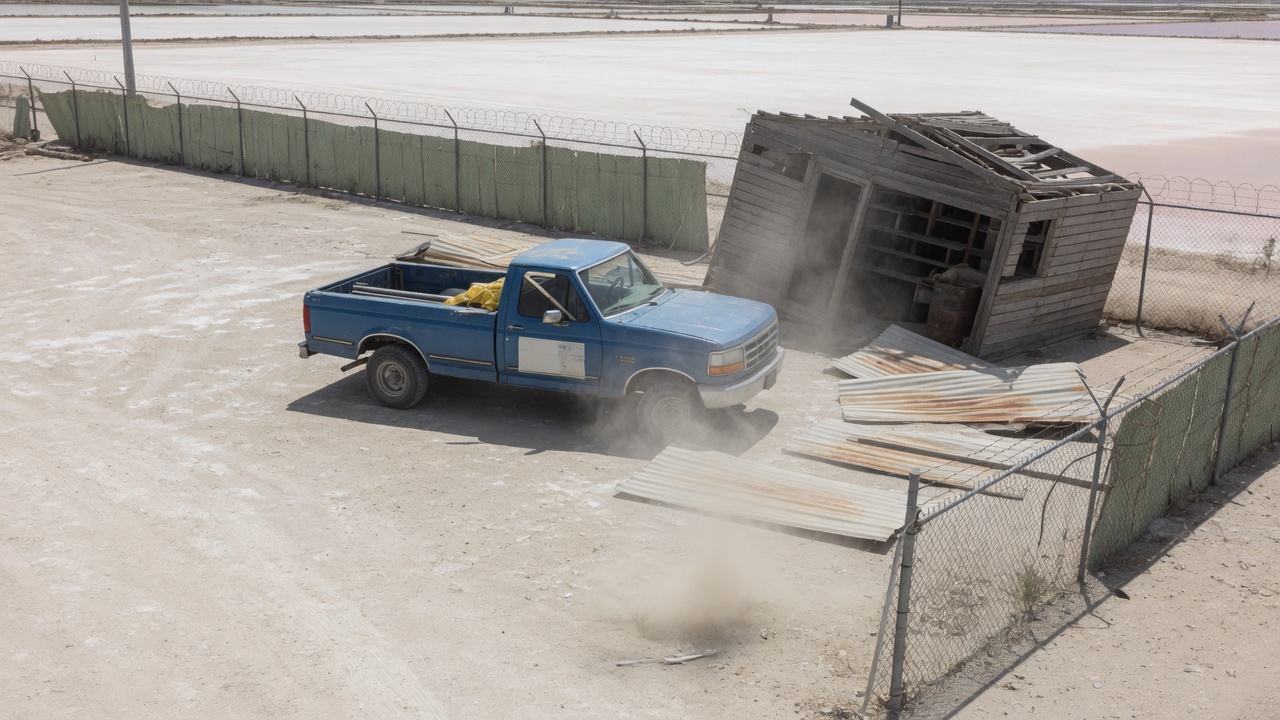
Their meeting place was an agricultural maintenance yard outside the protected salt-flat habitat. Beyond its fence lay low, bright land. Wind moved loose roofing somewhere out of sight.
Nadia stood beside a pickup with both hands visible.
Gabriel remained near Lucía’s car. He had borrowed a protective vest from his old employer, but he had no weapon. He was aware of its absence in the way a sore tooth occupied the mouth.
Nadia asked whether they had brought the police. Lucía said Adriana knew where they were and had preserved the invitation. Nadia looked disappointed and reassured at the same time.
“I signed the sheets,” she said.
Gabriel waited for an excuse.
“At first I thought the system was closing duplicates. Then I was told payment was late because cases were still open. They changed what ‘complete’ meant. I kept signing.”
She had brought original shift rosters, messages, and a ledger of manual overrides. Separate pieces held by different subcontractors could establish how an ordinary attendance record became a household’s consent to transfer.
She reached toward the pickup.
A shot struck the mirror.
Gabriel caught Lucía by the shoulder and pushed her behind the car. Nadia fell on the far side of her truck. He saw a radio slide across the dirt from her open hand.
Two men were moving behind the maintenance shed. They were not firing blindly. One watched the road while the other tried to reach the pickup.
Gabriel’s first instinct was to run toward Nadia. He stopped because doing so would put all three of them in the same exposed space. He told Lucía what he could see, not what he hoped. She called emergency services with their location while he pulled the car’s rear door wide enough to reach the first-aid pouch.
Nadia was still conscious. She crawled behind a concrete water tank, leaving one shoe in the dirt. Gabriel moved to her during a pause in the shooting. A bullet had passed through the outer part of her upper arm. He pressed a dressing against it as she swore at him for using her injured side to pull her.
The men withdrew when another vehicle approached along the access road. Whether they believed it was police or simply feared witnesses, Gabriel could not know. He resisted the urge to turn that uncertainty into a story he preferred.
Nadia’s papers were scattered beneath the truck. Lucía photographed their positions before collecting what she could without leaving cover. Some pages had blown beyond the fence. They let them go.
At the hospital, after the police interviews, Nadia asked Gabriel whether she had looked armed.
“I saw the radio.”
“Before or after?”
He could not honestly say.
She nodded as though that was the answer she had expected.
Her ledger named the security director overseeing the disputed projects: Rafael Soria. Gabriel had met him twice. Soria had thanked him once for completing an evacuation without incident.
The phrase returned with an altered shape. Without incident. No one who stayed behind to ask questions. No document anyone refused to sign.
Lucía sat beside Gabriel in the hospital corridor. He began to tell her that he had not known what those contracts meant.
“I believe you,” she said.
The relief lasted until she continued.
“Now we have to find out what you could have known.”
He did not ask her to make the distinction gentler.
5 — The price of a familiar voice
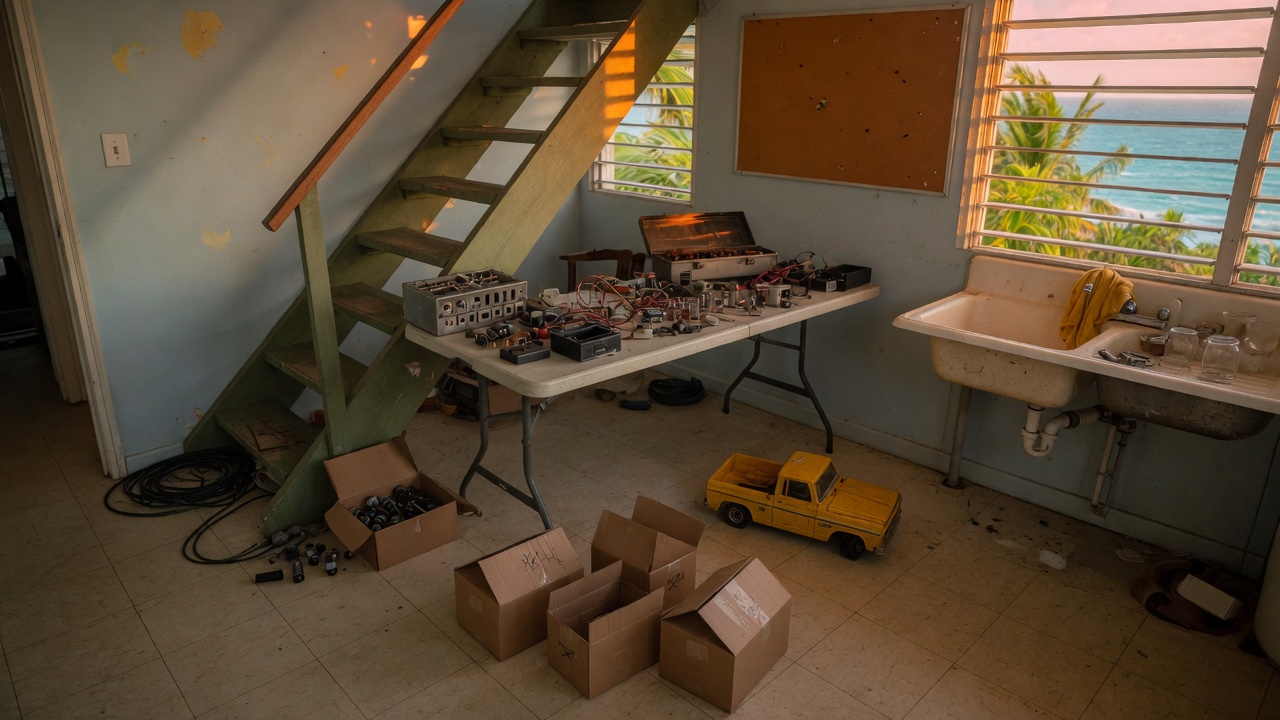
Tomás lived over the radio workshop he ran outside Rincón. Every stair carried something that belonged elsewhere: a battery, a folded beach chair, a box of connectors, a toy truck with a broken wheel.
His son Nico was constructing a city on the kitchen floor. It had four hospitals and no parking.
“Urban planning,” Tomás said. “We’re accepting proposals.”
Nico told Gabriel he could put his shoes near the industrial zone.
For an hour they ate and discussed small things. Tomás’s wife, Rebeca, corrected a story he had been telling wrong for twelve years. Gabriel almost forgot to watch the windows. When he remembered, he felt ashamed of bringing danger into a room where a child was explaining where ambulances would turn around.
Tomás had found a contact in Aguadilla who could identify the receiving contractor on the relay export. The contact worked with medical deliveries. Several supposedly relocated patients were still receiving supplies at their old addresses.
“The trucks know where people live,” Tomás said. “Even when the office doesn’t.”
Lucía asked him to stop sending location updates to the group chat. Until they knew how the meeting with Nadia had been found, they were reducing what they shared.
Tomás agreed too quickly.
Gabriel noticed. Then he decided he had not.
The next morning in Aguadilla, the contact showed them delivery acknowledgments that contradicted Meridian’s relocation dates. They also learned that a copy of Gabriel’s old employment records had been requested weeks before Inés vanished.
Someone had assembled a profile of him before the call.
They returned to Tomás’s workshop by a route they had not announced. Lucía stopped the car before the driveway. A parked vehicle below the house matched one visible in the maintenance-yard footage. Its occupant drove away as they approached.
Tomás was waiting beside the stairs.
He did not try to say it was a coincidence.
He had given Soria their arrival times, then their departure times. He had shared the location of Nadia’s meeting after Gabriel called to ask for a portable recorder with a longer battery life.
“They said they wanted to serve her papers.”
Gabriel hit him once.
Tomás struck the stair rail and sat down hard. Above them, a door opened. Rebeca looked from one man to the other, understood enough, and told Nico to stay inside.
Gabriel had imagined betrayal as something that would clarify his anger. Instead he stood with a hurting hand while his friend’s wife fetched a cloth.
Tomás said Meridian arranged a transport subsidy connected to Nico’s treatment. A subcontractor had threatened to interrupt it. Then payments had appeared in Tomás’s account under equipment-maintenance descriptions.
Lucía asked for dates.
There was a silence.
The threat had been made in March. Tomás stopped answering Soria for three weeks in May. Nico’s transportation continued. When Soria called again, Tomás answered anyway.
“I didn’t know if it would keep continuing.”
“You also needed the money,” Rebeca said.
He lowered his head.
They did not resolve it there. Adriana arranged for Tomás to provide his messages and bank records to counsel and investigators. Rebeca took Nico to her sister’s home. Gabriel would not shake Tomás’s hand.
Before they left, Luis sent a photograph of the envelope that had held the recorder. On its reverse, beneath a maintenance part number, Inés had written: If the copy fails, Alma has the original. Gabriel called Alma. She told them where to come and asked whether they had eaten.
Later, as they drove inland, Inés called from a number that changed before he could save it.
“The pitcher,” he said. “What did you really break?”
“Papi’s cassette player. We spilled juice into it and blamed the leak.”
He closed his eyes.
“That’s you.”
“Gabo, that story is in the family recordings.”
The road curved ahead. Lucía slowed for a truck carrying cut branches.
“Then tell me something they don’t have.”
Inés breathed into the connection.
“I don’t know what they have.”
6 — The house with no address
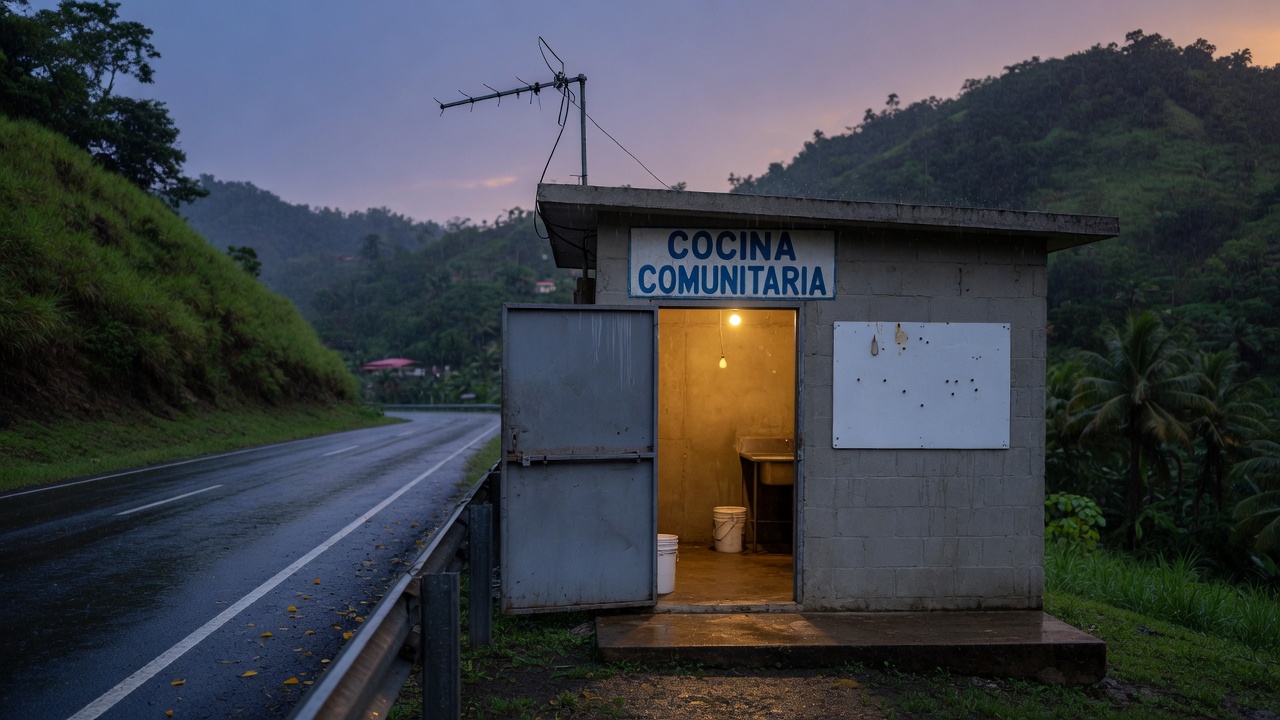
They reached the mountain community near Utuado after dark, following directions that referred to a painted wall, a closed store, and a tree Gabriel almost mistook for another tree.
The building was a former family workshop converted into a community kitchen and overnight shelter. Its mailing address existed. Meridian’s service map placed it outside the area requiring support.
“That is different from not existing,” Alma Rivera told him. “Remember the difference. They will count on you exaggerating.”
Alma had worked with Marisol. She wore her reading glasses on a cord and had a habit of finishing one task before acknowledging the next. Gabriel wanted answers. Alma wanted him to carry two containers of drinking water from a neighbor’s truck.
Afterward she gave him rice, beans, and a chair with an uneven leg.
“Your mother said you would always choose the broken chair and complain about it.”
He moved to another chair.
For the first time in days, Lucía laughed without stopping herself.
The shelter had become a place where people disputed records together. A man had been assigned a temporary address on a street that did not exist. A woman’s referral had been closed as a duplicate of a cousin’s. A delivery company had corrected its own records, but the correction had not reached Meridian’s reporting system.
Most of the errors were errors. Alma said this plainly. Fraud survived among them because ordinary mistakes gave it cover.
She brought out a red medical bag with a repaired handle.
Inside were appointment cards, old notebooks, and an envelope containing memory cards. Marisol had recorded reminders during long shifts, intending to organize them later. After her death, Inés had digitized what she could and kept family copies. Years afterward, when Meridian hired her to help migrate community archives and emergency-contact records, she had imported a test collection that included some family material.
“She wanted to know whether the system could keep a voice attached to the right name,” Alma said.
Gabriel looked at the bag.
“That’s how they got her.”
“A copy of her voice.”
Alma made him say it correctly before she continued.
They played the original file on a borrowed reader. The corrupted copy in Luis’s recorder had pointed them here; Alma’s separate card still worked.
His mother spoke over the clatter of something being moved across a table.
“Gabriel, stop looking for your sister’s papers. Come get me the red medical bag. She left it by the door.”
Inés answered from far away that she had not left anything anywhere.
Marisol laughed. “Pues alguien lo dejó.” Someone had.
Gabriel heard the edit now: the severed word, the breath lifted from another place, the room tone pasted over a gap. It was not a miracle, not a perfect synthetic person. It was workmanship applied to his longing.
He asked Alma when his mother had made the recording.
She checked the envelope rather than guessing. It predated the hurricane. The material included later notes too, but no voice returned from death.
The note that mattered to Inés was mundane. Marisol had described two different patients whose identifying information was being confused. She had recorded their distinctions so the next person would not repeat the error. Later migration logs showed the distinction being removed.
Nothing about the storm had been engineered by Meridian. The company did not yet exist in its present form. It had inherited records, purchased services, and eventually discovered that unresolved cases could be made profitable if somebody called them resolved.
Gabriel sat for a long time after the file finished.
Alma did not tell him his mother would be proud. She asked whether he wanted to hear the next recording.
He said no. Then yes.
It was a grocery list. Marisol was trying to remember whether they had onions.
He cried at that, with less dignity and more relief than he would later be able to describe.
7 — The longer road
The next day, they stayed.
Lucía had work to do with Adriana. The original material had to be copied without losing its context, the dates checked, the people named in it protected. Gabriel wanted to leave for Humacao, where Inés said she could meet him. Alma asked whether he would help repair a radio first.
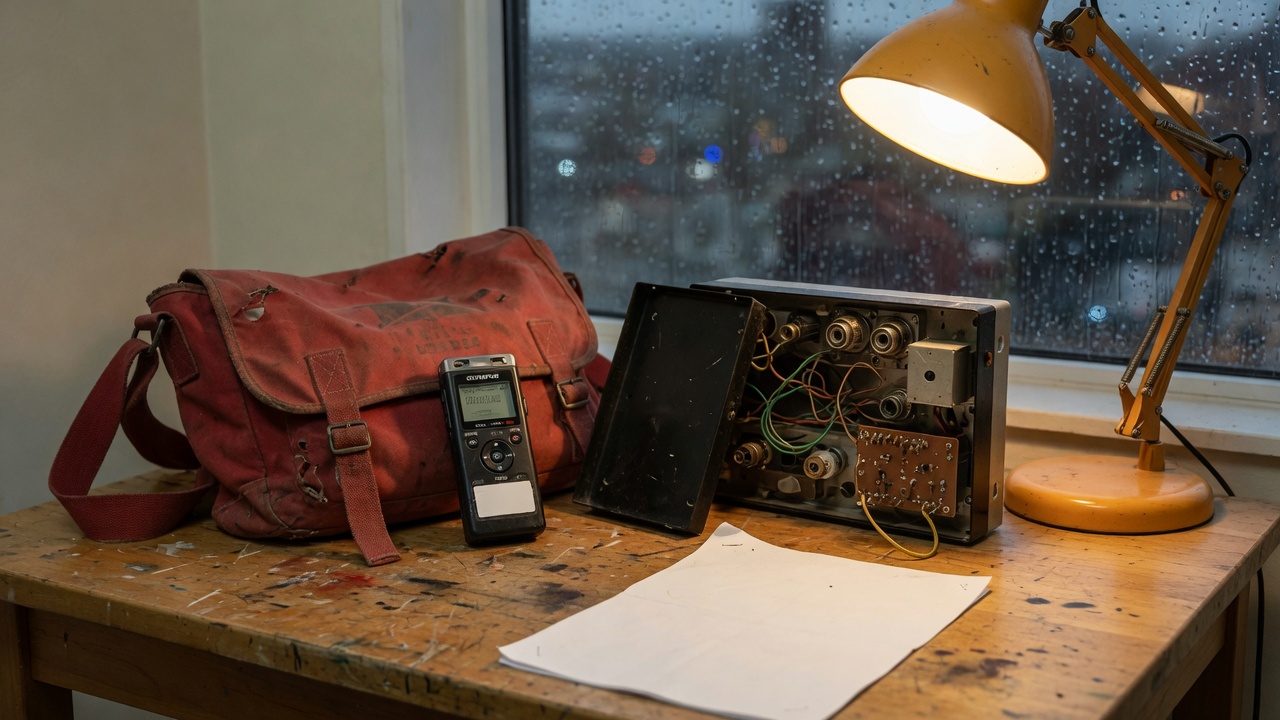
It was the same make as the one on his workbench in Añasco.
He found the fault in forty minutes. Finding somewhere to mount the replacement antenna took the rest of the morning because three people disagreed about whose roof was safest and the person with the ladder had gone to visit his aunt.
Nobody’s life paused for his urgency.
A teenager named Abril watched him work. She wanted to know whether the soldiers in games actually reloaded that often.
“Some people get nervous,” he said.
“You?”
“Me.”
She considered the answer, then asked him to hold the ladder more steadily.
That evening, someone brought a battered speaker out to the yard. Two neighbors argued over music. A little girl fell asleep across three chairs while adults talked around her. Gabriel helped wash plates and discovered that the woman beside him had no interest in his version of the investigation. She wanted to know whether he could look at the fan in her kitchen before leaving.
Lucía joined him by the sink after midnight.
“This,” she said, “is what your photographs never showed me.”
He used to send her pictures from contracts: hotel windows, airports, meals eaten alone. He had thought he was including her.
“I didn’t know how to send the waiting.”
“You could have called.”
He put a clean plate in the rack.
“I know.”
It did not repair their relationship. It made a different conversation possible.
Before they left the following morning, Abril gave him a small folded page. It contained the shelter’s corrected contact list, printed in large type for the people who kept their phones turned off to save power.
“Don’t put it in the internet,” she said. “It’s for knowing who to call.”
He put it inside the red medical bag.
The journey east took most of the day with stops and a detour around road work. Gabriel watched the mountains give way to different settlements and busier approaches. Lucía slept for part of it. He did not hurry through towns just because the road ahead looked open.
In Humacao, they met Adriana in a rented office near the processing center Meridian used for eastern contracts. She had contacted investigators and a reporter at a separate outlet, so the story would not depend on Lucía’s employer alone. Requests for records and protection were moving. Some institutions had responded well; others had not yet responded. The progress was uneven, not absent.
“We can’t promise an arrest because a spreadsheet is frightening,” Adriana said. “We can establish who made a false entry, what they knew, and what they got from it.”
Inés sent a photograph of the center’s public reception desk and a time for the following morning.
Under it she wrote: COME THROUGH THE FRONT.
Gabriel read it twice. He had spent days imagining how to break into the place holding his sister. He had not imagined asking a receptionist to call her extension.
8 — Observed and authorized
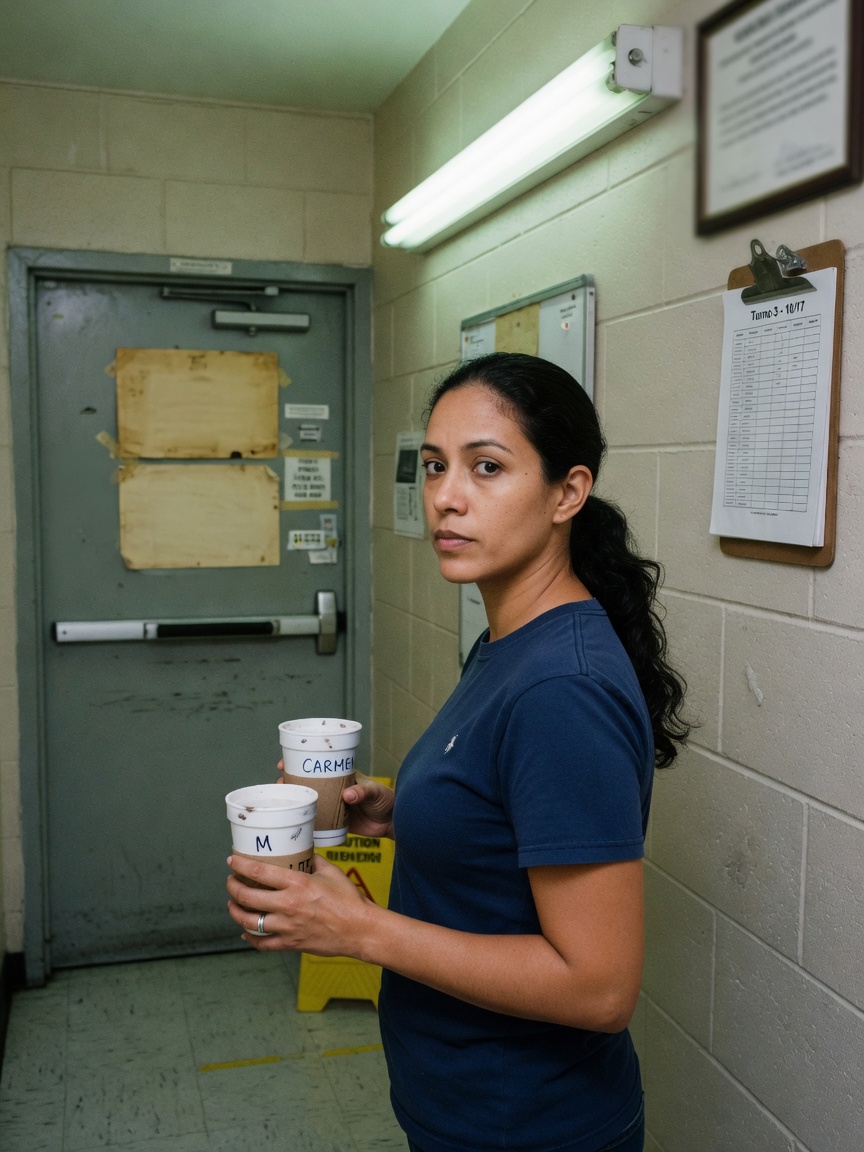
Inés came through the security door wearing a visitor-management badge and carrying two coffees.
She handed Gabriel the one without sugar.
He did not take it.
For a moment neither moved. Then she set both cups down and put her arms around him. He held her with enough force to make her wince.
He wanted to be angry before being relieved. His body would not cooperate.
They spoke in a small meeting room with a window onto the reception area. Lucía stayed with them. Inés had agreed that someone independent should hear her account.
She had discovered manual overrides months earlier. Some were legitimate corrections. Others transformed disputed relocations into completed work, generating invoices and making occupied properties appear cleared in contractor reports.
She reported the problem to Elena Varela, Meridian’s founder and technical director. Varela ordered an internal review. Cases stopped appearing in Inés’s ordinary searches.
She made copies. Soria noticed.
“He said I could leave,” she told Gabriel. “He also showed me your employment file and Alma’s address.”
The man at the relay station had brought her to the eastern processing center. She had remained there, apparently working, while arranging independent access to the records Soria could not alter without leaving traces.
“Why the call?”
“I was trying to warn you. I didn’t send the second recording.”
Meridian’s internal call-routing access and the family archive explained how Soria’s team had assembled and delivered it. They had expected Gabriel to rush to the station, where a false rescue report could bring him into contact with armed guards and make the witness threatening their operations look unstable or dangerous.
“They wanted you frightened,” Inés said. “They know what frightened people do.”
“You could have told me.”
She looked toward the reception window.
“There’s more.”
She had suspected that Soria would follow Gabriel. Instead of warning him as soon as she regained a safe channel, she had allowed him to keep moving. Every attempt to intercept him connected another contractor, another access request, another manual override to the same small group.
“Nadia was shot.”
“I didn’t know they would—”
He moved away from her before she finished.
“You knew enough not to be there.”
Inés sat down. She did not ask Lucía to stop recording.
Then she showed them the part she was most ashamed of.
During the original migration, Inés had approved rules for merging records that looked like duplicates. The rules made the system faster. They also collapsed differences that could represent separate people. Her mother’s old note was one of the records she had rediscovered while investigating the damage.
She had spent months looking for someone else’s intentional misconduct and found her own careless work beneath it.
Gabriel asked about their mother's name in the transfer queue. Inés opened the linked history. Marisol's entry came from the legacy archive, not a current household relocation. A matching rule had connected it to a service case; a later override had closed the conflict by transferring it out of ordinary review. The record had never meant she was alive. It meant somebody had chosen a tidy status instead of preserving a question.
The roadside sign had exposed another careless connection. The station supplied text to the temporary transport displays; someone had pointed the display job at the internal completion export rather than the public directions. Inés showed him the change log. Soria had used Gabriel's profile deliberately, but he had not planned every failure Gabriel encountered. Some of the machinery worked badly without anyone needing to order it.
“That doesn’t make you responsible for their violence,” Lucía said.
“It does make me responsible for the rules.”
Gabriel looked at his sister across the table. Her coffee had gone untouched too.
Inés turned the screen toward him. Two maps displayed the same service area. One showed field observations. The other showed what contracts authorized the company to report.
Between them, a row of homes vanished.
“They call this reconciliation,” she said.
He thought of the blue door and the man carrying an oxygen machine without asking where it would go tomorrow.
“Who lives there?”
For the first time since she entered the room, his sister looked relieved by his question.
9 — The people between entries
The house belonged to no single story.
One part of the family said it had always belonged to an aunt. Another said a promise had been made. There were receipts, a disputed boundary, a roof repaired by someone who had since moved away. Meridian’s field inspector had used the disagreement to classify occupancy as unresolved. The reporting system subsequently treated that unresolved status as absence.
Lucía refused to simplify it into a perfect family with perfect papers.
“They shouldn’t have to be perfect to be here,” she said.
Two siblings, Eva and Mateo, had been assigned different temporary accommodation records even though they lived with the same guardian. A school transport provider followed one record. A medical delivery service followed another. The guardian spent each morning persuading systems that had never met each other to describe the same children.
Gabriel drove them to appointments while Adriana worked through the documentary conflict. Eva, fourteen, distrusted him. Mateo asked whether he knew Inés because she had once fixed a tablet for him.
Inés had left that out of her account. She knew names behind some of the records and had still told herself she was dealing with categories.
At the office, a clerk named Teresa found the original intake sheet in a storage carton. It contained the guardian’s actual contact details, never transferred into the new system. Teresa made a witnessed copy and recorded how it had been retrieved. She was afraid of losing her job. She did it anyway.
By evening, the siblings were still in the same imperfect house. The immediate transport and contact records were corrected. The property dispute remained unresolved. Gabriel had expected a rescue to look different.
That night, Varela asked to meet him.
She chose a small conference room and arrived without Soria. She was older than Gabriel had expected, tired in a practical way, with a sleeve stained by ink. Nothing about her resembled the person he had prepared to hate.
She showed him delivery figures, restored referrals, service interruptions prevented. Some of the work was independently verifiable. Continuity had genuinely helped people.
“You found fraud,” she said. “Help me remove it.”
“My sister tried.”
Varela pressed her thumb against the ink stain.
An outside review was scheduled to receive the company’s consolidated records at the end of the week. Varela feared that admitting unreliable data would collapse contracts that funded legitimate services. Soria feared investigation of the people and payments behind false completions. Their interests overlapped until they did not.
“You could preserve the original records,” Gabriel said.
“I have.”
“Then give them to the investigators.”
“Some of those records contain protected identities. People who asked us not to connect their old address to their new one.”
It was a real problem. She used it as if being right about one danger absolved her of the others.
She offered a controlled disclosure that would identify selected subcontractors and protect the operating system.
Gabriel asked whether her own decisions would appear in it.
For the first time, she did not answer immediately.
When he left, she gave him the address of a security analysis facility in the northeastern uplands. Soria used it. Its audit logs were separate from the processing center.
“Why tell me?”
“Because he is preparing to blame your sister.”
“And you?”
Varela looked at him through the open doorway.
“I am trying to understand how much of this can still be repaired.”
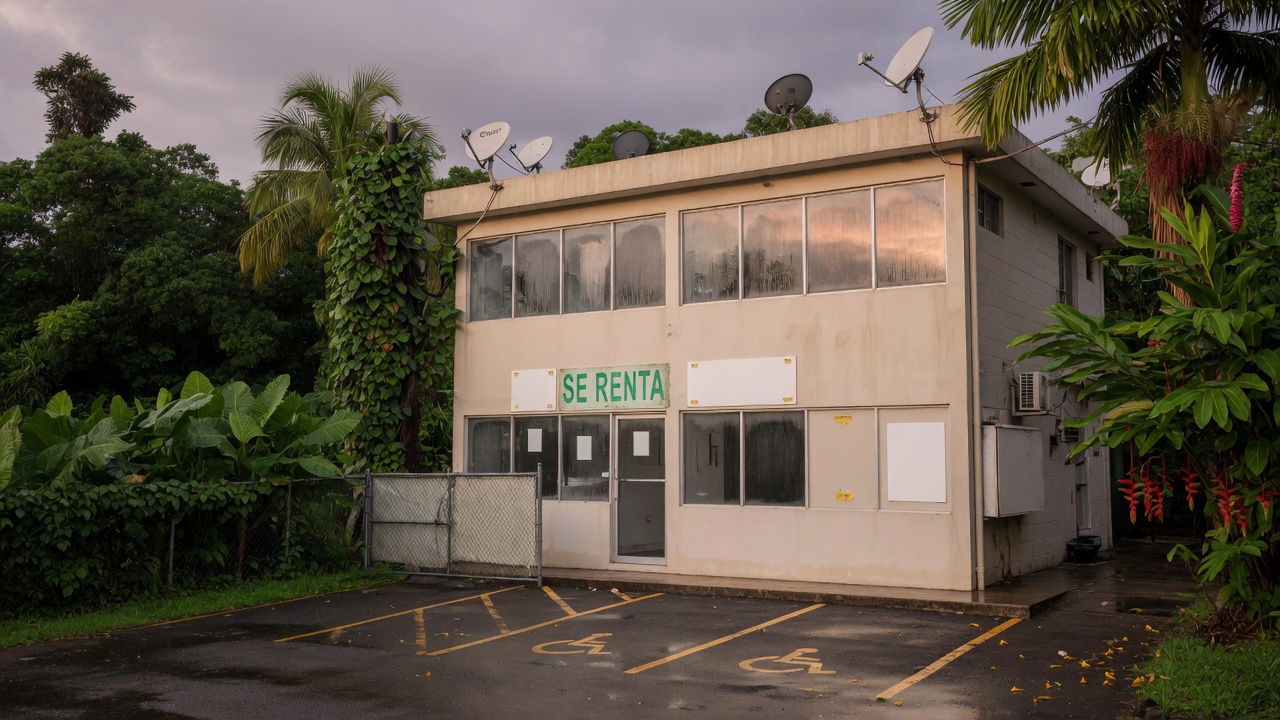
10 — The rehearsal
They did not drive straight into another ambush.
Adriana arranged for Inés’s access and Varela’s written authorization to be preserved. Investigators received the facility address. Gabriel and Inés would retrieve an agreed diagnostic export during an ordinary maintenance window, with Lucía outside and their whereabouts known. If access was denied, they would leave.
By late afternoon they were in the northeastern uplands, at a leased building near Río Grande, outside the national forest boundary. Humidity settled on Gabriel’s shirt when he stepped out of the car. The mountain weather had closed the view without making the rest of Puerto Rico share its rain.
The technician on duty seemed more concerned about the authorization’s formatting than its consequences. He called a supervisor, then let them into a terminal room.
On one monitor, Gabriel saw the relay yard in Añasco.
He recognized the truck before he recognized himself.
The reconstruction combined security footage, position estimates, and timestamps. It was not a perfect recording. Several movements were dotted lines. The display marked uncertain intervals explicitly.
Another panel compared his behavior with earlier training sessions recorded by his former employer. Soria had acquired the training data through a contractor relationship. The system’s name was ECHO.
It estimated that Gabriel would move toward a trapped person even when that meant leaving cover. It estimated that he would follow an instruction delivered in a familiar voice. It gave probabilities, not certainties.
On a third screen was a plan for a loading-yard transfer in San Juan.
Three predicted approaches. One highlighted path. A note beside it: SUBJECT FAVORS SERVICE ACCESS WHEN CIVILIAN EXTRACTION IS PRESENTED AS URGENT.
Gabriel felt an almost physical shame at how ordinary the explanation was. Nobody had read his mind. They had watched him, kept the recordings, and designed situations around what he cared about.
“I supplied training examples,” Inés said.
He turned slowly.
“For evacuation exercises. Before I knew what Soria was using them for.”
“Is there a part of my life you didn’t upload?”
She accepted the question without defending herself.
The technician returned. His supervisor now wanted the export stopped.
Inés showed him the authorization. He looked at it, then at the monitor, then at the name of the supervisor who had issued the cancellation. He began copying his own access log to a separate report.
“I’m putting down that you were admitted correctly,” he said. “Whatever happens after that.”
The lights went out in half the room.
A door slammed farther down the corridor. Soria’s men had arrived sooner than the investigators who had been notified. Gabriel heard the technician being told to leave the terminal untouched.
He took Inés by the wrist, then let go. She knew the building better than he did.
“Where?” he asked.
She pointed to the ordinary exit behind reception.
It was the route he would have rejected as too obvious.
They did not win a gunfight. They escaped through a working building while the staff argued with men who expected instant obedience. Gabriel held a fire door open for the technician. Inés left her bag when it caught on a chair. A shot broke the glass above reception, and they went down together behind the desk.
Outside, Lucía sounded the car horn continuously. Neighbors appeared at windows. The responding officers’ arrival turned a private interception into an incident Soria’s men could no longer control. Two fled; one was detained.
The export had completed to the maintenance terminal and a prearranged investigator-controlled destination before the power cut. Inés verified receipt rather than assuming it.
Gabriel stood in the rain afterward, unable to stop looking at his hands.
He had spent years practicing the first movement after danger.
For once, asking a question had been faster.
11 — A voice that would wait
Adriana established a temporary working room in San Juan. They arrived separately, after further interviews, with the documents and devices routed through arrangements Gabriel only partly understood.
He was learning to tolerate that. Trust did not require him to be the person holding every object.
The evidence now supported more than a story about bad records. It connected false completion reports, payments, access requests, threats, and attempts to seize the source material. It also connected Inés’s migration work and Gabriel’s past assignments to people they had harmed without understanding all the consequences.
Lucía’s first article went live the following morning. It named the reporting practices and the company, published corroborated examples with consent, and omitted private details unrelated to the allegations. A second outlet published its own work. Several agencies announced inquiries. Meridian disputed the allegations and said it was cooperating.
The story did not make the danger disappear.
Soria’s contractors still had keys, vehicles, equipment, and original paper material awaiting transfer between leased facilities. An interim preservation instruction had reached Meridian, but not every subcontractor had acknowledged it. Nadia had identified one scheduled movement as particularly important: the original approval sheets associated with the false completions.
Copies existed. The originals could help resolve claims that the copies were incomplete or manipulated. The people moving them also knew who had authorized the process.
“This is not the only copy of the truth,” Adriana told Gabriel. “Do not let anyone make you act as if it is.”
He wrote the sentence on a card and put it in his pocket.
That afternoon, a call reached the working room through the repaired community radio network. Alma had referred the caller to them without revealing the shelter’s contact list.
“¿Todavía hay alguien ahí?” a woman asked.
Gabriel recognized the phrase. He had heard it on a recording at the station, then on Tomás’s workshop receiver. He had assumed it was interference or an old test.
The woman’s name was Beatriz. She would not give her location. She had been a records clerk before Meridian consolidated the services her employer provided.
“Some of the changes you found were made to hide people,” she said.
“We know.”
“You know about hiding them from a payment audit. I mean hiding them from somebody who wanted to find them.”
She described a relocation process used by people leaving violent households. Old and new contact details had deliberately been kept apart. Inés’s duplicate-merging rules risked reconnecting them.
An indiscriminate release of the dataset could expose those people.
Gabriel looked at his sister. She was already searching the data dictionary, not the names.
Beatriz would provide an explanation through Adriana if she could do so without identifying the people she had helped.
Then she asked whether Gabriel intended to publish everything.
He thought about the powerful simplicity of that promise. No more secrets. No more hidden rooms. How good it would have felt to say it.
“No,” he answered.
“Then I can keep talking.”
They listened for forty-three minutes. Nobody interrupted to tell her that time was running out.
12 — What the fortifications could not hold
In Old San Juan, the streets made Gabriel aware of his own impatience. A delivery stopped ahead of them. People stepped around it. A man carrying flowers took his time crossing. The city was not a corridor constructed for Gabriel’s emergency.
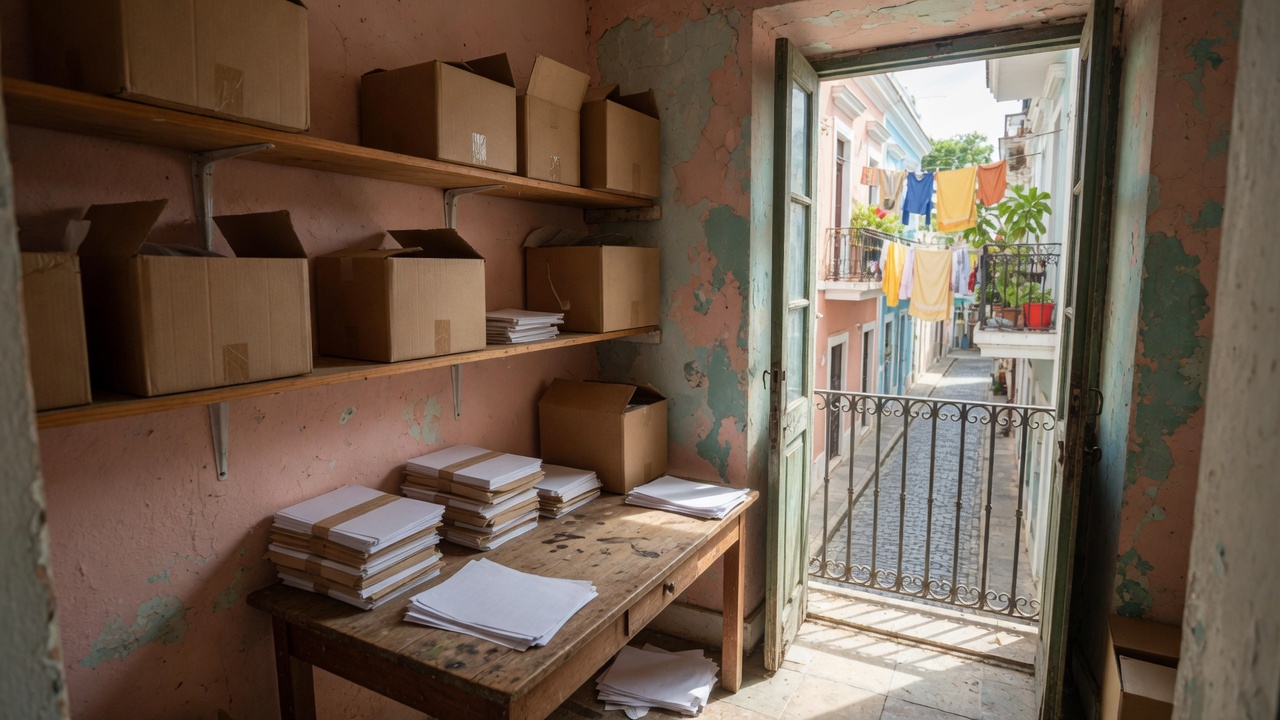
Their destination was a privately maintained archive in a restored commercial building. It held project correspondence and records entrusted by families, including some of the relocation material Lucía had been tracing. The owners had agreed to preserve it independently and admit investigators by arrangement.
Before the meeting, Gabriel and Lucía walked where they could see the sea and portions of the old defenses. He had visited as a child and remembered almost nothing except heat and wanting something cold to drink.
Lucía spoke about how easy it was to describe an old wall as if its purpose had always been the same. Gabriel listened. The place had belonged to different administrations, held different fears, been repaired by hands whose names they did not know. Its survival did not make every story told about it accurate.
He asked whether her article would include him.
“Yes.”
“How much?”
“What I can establish.”
He nodded, then had to nod again because the first time he had only been pretending to accept it.
Inside the archive, Celia was helping identify people in photographs. She had insisted on coming with her niece. The blue door was not there; its images and provenance records were. Nobody had asked an elderly woman to carry her history across the island as a prop.
Nadia joined by a protected video connection. Luis had sent a signed statement and the cabinet photographs. Teresa’s retrieval record had arrived. The technician from the ECHO facility had agreed to speak through counsel.
These were people Gabriel might once have described as support.
They were now the reason his account could be believed.
Varela came late.
She brought a preserved internal audit and a revised disclosure proposal. It was more extensive than the first. It admitted knowing about unresolved cases. It described Soria’s departures from company policy in careful language.
Inés found her own name in an appendix describing migration failures.
Varela’s approvals were summarized rather than reproduced.
“You kept the originals,” Inés said.
“Yes.”
“You knew they mattered.”
Varela sat down opposite her.
“I thought I could remove the people doing this without destroying the system.”
“And when you couldn’t?”
She looked toward the archival boxes. For the first time Gabriel saw fear that was not about being caught. Varela understood that the record she had curated might outlive her intentions.
“I waited.”
Nobody offered her a more flattering word.
Adriana explained the route for preserving the complete audit under controlled access, with a public account that did not expose protected identities. Varela could cooperate without choosing which parts implicated her. Essential services could be transferred through responsible operators; that work was already being arranged, unevenly and urgently.
Varela asked how long it would take.
“Longer than you want,” Adriana said. “It starts when you stop withholding what you have.”
Soria called while she was still deciding.
Varela looked at the phone, then put it on the table where everyone could see it ring.
13 — No one left in the truck
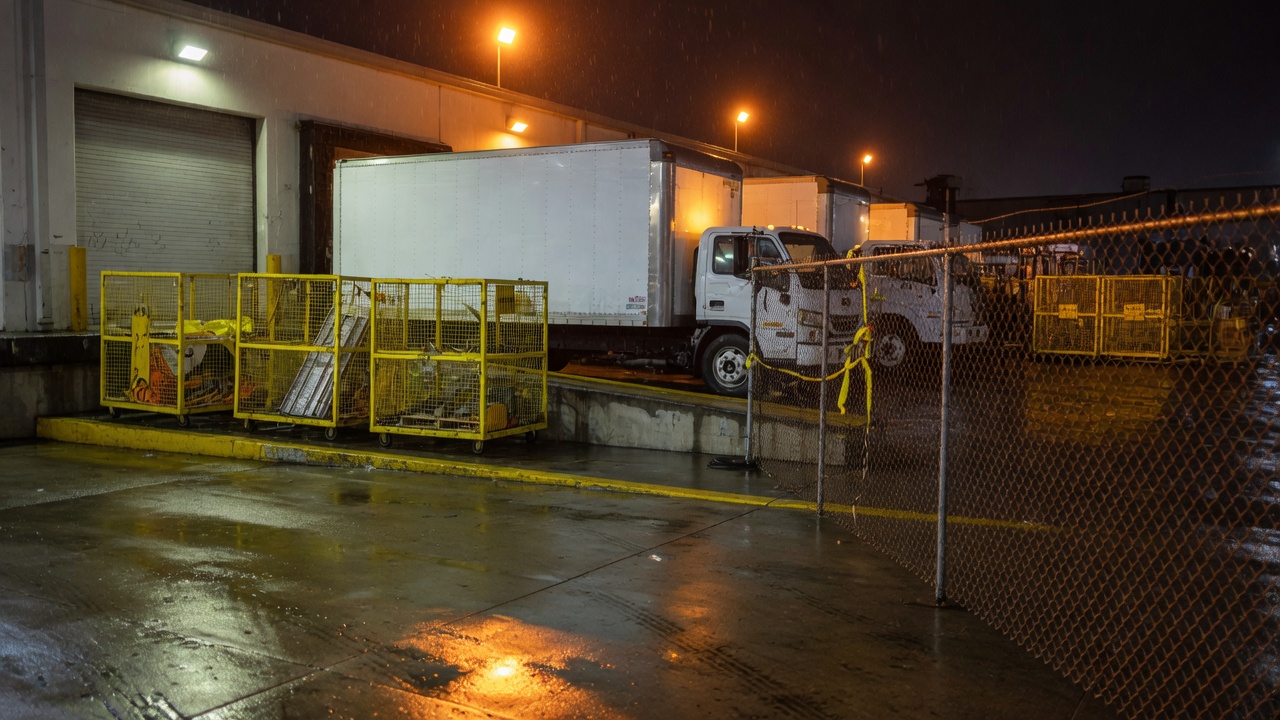
The transfer yard was outside the old city, in a leased logistics site within the wider San Juan area. It had loading bays, rain-streaked concrete, fluorescent lights, and a damaged sign about workplace safety.
Soria was there because the paper originals were there, along with a dispatcher who could identify which instructions had been verbal. A lawful collection had been scheduled. His team intended to leave before it arrived.
Gabriel was not sent to assault the building. He accompanied Adriana’s records specialist and an employee representative to identify material at the public-facing collection point. Inés waited outside with Lucía. Their arrival and purpose were documented. Officers were on their way to support the preservation process, but the first violence happened before that escort reached the yard.
A driver tried to leave in a small truck. A warehouse employee stood in front of it, saying there were two workers still inside the locked cargo compartment. Soria’s men pulled him aside.
Gabriel heard the knocks.
For one dizzy second he was back at the station.
He recognized the pressure ECHO had named: the urgent trapped person, the service entrance, the route that would pull him out of sight.
The danger was real. Recognizing manipulation did not make the people inside disposable.
He told the records specialist to stay behind the vehicle barrier and call the dispatcher directly. He asked the employee representative where the truck’s driver was supposed to take it. He kept talking while moving into view of the yard camera rather than down the blind service lane.
“Open the compartment,” he called.
Soria appeared at the loading door with a pistol held low.
“Step away from the vehicle.”
“There are people in it.”
“Then you’re delaying their departure.”
The driver looked from one man to the other. He did not know enough to choose confidently. Gabriel asked his name. It was Óscar.
“Óscar, did you see them get in?”
The driver shook his head.
Soria raised the pistol.
A shot struck the barrier. The employee representative screamed and went down, uninjured but tangled in a fallen chair. Gabriel pulled her behind cover. The records specialist stayed on the phone, giving what he saw in short, precise sentences.
One of Soria’s men advanced toward the truck. Another shouted that police were at the entrance. The noise broke their coordination. Gabriel reached the driver’s door while Óscar climbed out the opposite side and ran toward the officers.
The truck keys were still in the ignition. Gabriel took them and stayed below the window line. He could hear Inés calling from outside the fence, telling him which vehicle held the people. He answered that he knew.
He did not pursue Soria when the man moved toward the rear office.
He opened the cargo compartment.
The workers inside had been locked there after refusing to surrender their phones. One had difficulty standing. Gabriel helped them down as officers moved into the yard. He surrendered the keys immediately, identified himself, and kept his hands visible.
Behind him, smoke began coming from the office window.
Soria had set paper and packing material alight. The sprinkler system activated in one area and failed in another. A fire alarm began repeating instructions no one could hear over the shouting.
Gabriel looked toward the office. Through the smoke he saw a person stumble against the doorway.
Soria.
For a brief, appalling moment, rescue presented itself as an unfairness.
Then Gabriel remembered the officers, the cameras, the people whose accounts were already elsewhere. Soria alive could answer questions. Soria dead would become whatever story remained convenient.
He called out the man’s position. A responding officer and a worker with an extinguisher reached the doorway. Gabriel helped clear the path for them, moving a fallen trolley instead of entering the smoke himself.
When they brought Soria out, his face was gray and one hand was burned. He looked smaller without the distance his orders usually traveled.
“You don’t know what you’ve interrupted,” he told Gabriel.
Gabriel stepped aside for the paramedics.
“Then explain it.”
14 — The living record
The investigation did not end at the yard.
Some originals were damaged. Others survived in cabinets outside the fire. Nadia’s copies, the preserved audit, contractor records, witness statements, and material already delivered to investigators did not cease to exist because smoke had filled one room.
Lucía wrote an account of the violence that distinguished what she had witnessed from what others reported. She did not describe Gabriel as having single-handedly saved the evidence. He had opened a truck. Other people had preserved the case.
Inés gave a formal statement about her own work. She included the decision to let Gabriel’s movements expose Soria’s network without adequately warning him. Adriana arranged independent advice for her so Gabriel’s interests and her own were not treated as identical.
Varela released the complete internal audit through the controlled process. It contained orders to delay corrections until reporting periods closed, warnings from employees, and her own approvals. Her cooperation did not make those decisions disappear.
Tomás came to San Juan to be interviewed. He met Gabriel outside afterward, carrying no radio and no useful news.
“I’m not asking you to forgive me,” he said.
Gabriel was tired of people announcing what they were not asking.
“How’s Nico?”
“He’s with Rebeca.”
“Good.”
Tomás nodded. They stood together long enough for the silence to become something neither could perform his way out of.
Then Gabriel left.
Over the following weeks, some contracts were suspended and others moved to interim operators. Deliveries were disrupted despite the precautions. Alma called to report a missed order, furious at anyone tempted to call the transition a success too early. Inés helped trace the failure and wrote down who was responsible for correcting it. She no longer marked a case complete because she had sent a message.
The charges, proceedings, and contractual disputes would take longer than the journey across the island. Families still needed help proving things that should never have been made doubtful. Celia’s occupancy evidence became part of that process, not an instant resolution of every property question.
Gabriel returned to Añasco before the end of the month.
The radio was still on his workbench.
He called its owner and explained that her old station was gone. He could make the set work properly, but it could not bring back a transmitter that no longer existed.
“I know,” she said. “I wanted it ready if somebody started another one.”
He had spent all that time preparing the wrong explanation.
Inés came by in the afternoon. She stood outside until he raised the door the rest of the way.
They worked without much conversation. She cleaned the damaged connector on Luis’s recorder; Gabriel replaced a fuse in a customer’s power supply. Their family had always found it easier to begin forgiveness with an object between them.
“I thought if I told you everything, you’d tell me to stop,” she said.
“I might have.”
“I know.”
“You should have let me decide.”
She put the screwdriver down.
“Yes.”
He did not tell her it was all right. It was the first answer she had given him that did not need another question.
Before leaving, she placed a new copy of Marisol’s recordings on the desk. The files were organized by the best-supported dates, with uncertain dates marked uncertain. The original material remained preserved separately.
“No cleaned-up voice,” she said. “No missing pieces hidden.”
He waited until she had gone to press play.
His mother discussed a patient, stopped, and began again because she had said the wrong name. She corrected herself without embarrassment. Later she asked whether anyone had eaten. A door opened in the background. Inés complained about something. Gabriel, younger and careless with his volume, answered from another room.
For the first time in fifteen years, he listened without waiting for her to tell him what to do.
Epilogue — Someone is here
Six weeks later, the repaired radio sat in its owner’s kitchen tuned to a new community program.
The broadcast was modest: local notices, music cleared for transmission, a segment about correcting service records, and a man who took too long reading the weather. Luis called once to complain that the host was pronouncing his street name incorrectly. The correction took twelve seconds.
Gabriel and Lucía were eating outside his shop when her phone rang. She checked it, asked whether the caller could wait ten minutes, and received an astonished yes.
“Work?” he asked.
“Dinner first.”
They had not moved into an apartment. They had agreed to have dinner again the following week. It felt less impressive than the promises they used to make and more likely to happen.
Inside, the shop receiver sounded a contact tone from Alma’s network.
Gabriel excused himself. A message had been left for Adriana, with permission for him to hear it.
Beatriz’s voice was clearer this time.
“I have someone who wants to give a statement. They know the risks. They chose to contact you.”
She paused.
“There are records outside Meridian. Older ones. Some of the people we helped were given names that belonged to people who had died. I thought separating the files would keep them safe. Someone has been reconnecting them.”
Gabriel looked toward the small desk where his sister’s careful file labels sat beside customer receipts. Another problem. Other lives. Not a reason to pretend the work already done had meant nothing.
“Don’t send names through this channel,” he said. “Let Adriana arrange it with them.”
“You found the people they erased,” Beatriz said. “Now we have to protect the people we hid.”
He wrote down the time of the message and called Adriana. He did not reach for the locked case.
Outside, Lucía lifted a hand to ask whether the food should be covered. He shook his head and returned to the table.
The receiver remained on.
When the next voice asked whether anyone was there, Gabriel was close enough to answer.